Targa 27.2 Inboard vs Outboard: Key Differences, Pros, and Cons
One of the biggest decisions when speccing out a new Targa is choosing between inboard diesel power and outboard engines. From the Targa 32 downwards in the range, buyers can configure the boat either way, and that decision changes more than just performance numbers. It affects the swim platform, storage, range, maintenance, and even how the boat feels underway.
To compare the differences directly, Andrew Porter of East Coast Yacht Sales walked through two nearly identical 2026 Targa 27.2 models — one powered by twin Mercury V8 300 outboards and the other with a single Volvo Penta D6 400 diesel inboard.
If you are researching the pros and cons of inboards versus outboards for coastal cruising, pilothouse boats, or all-weather boating, the Targa 27.2 provides a very practical real-world comparison.
What Makes the Targa 27.2 a Good Comparison?
Many boats are designed specifically around either outboards or inboards. The Targa 27.2 is unusual because it genuinely works well with both.
The hull, pilothouse, and overall mission of the boat stay consistent regardless of propulsion choice, which makes it easier to understand how the engines themselves change the ownership experience.
Both versions remain:
- All-weather pilothouse boats
- Capable coastal cruisers
- Comfortable in rough conditions
- Efficient for their size
But the way they achieve that capability is very different.
Targa 27.2 Outboard Setup
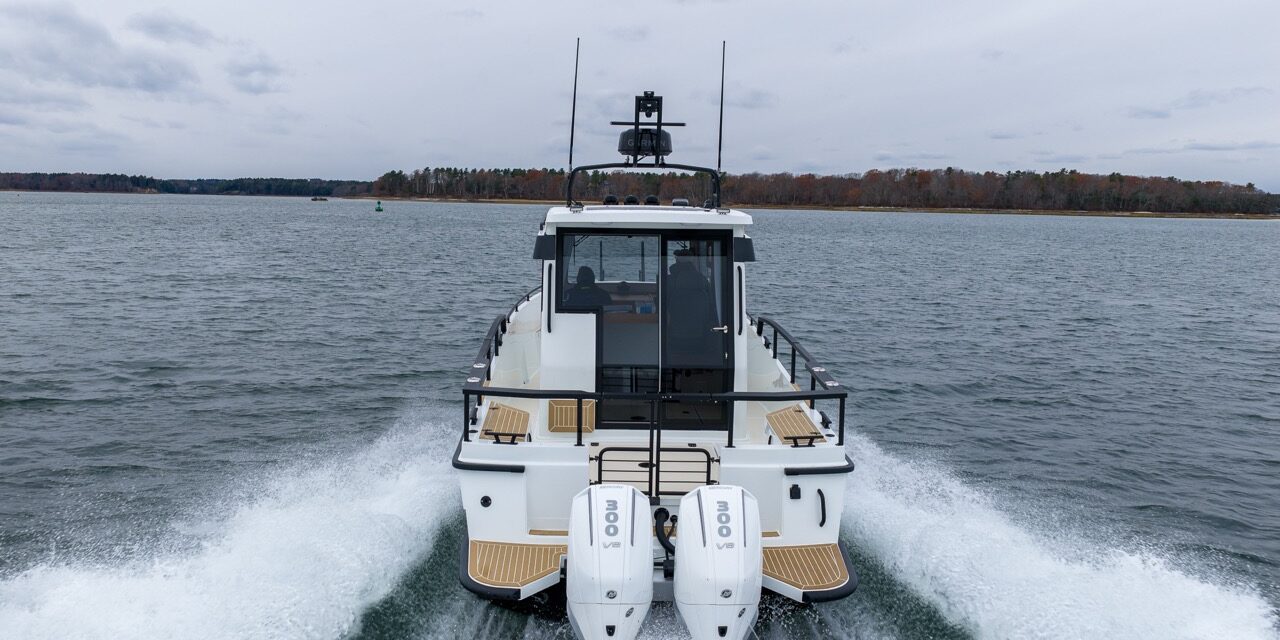
The outboard version of the Targa 27.2 uses twin Mercury 300s mounted on the transom.
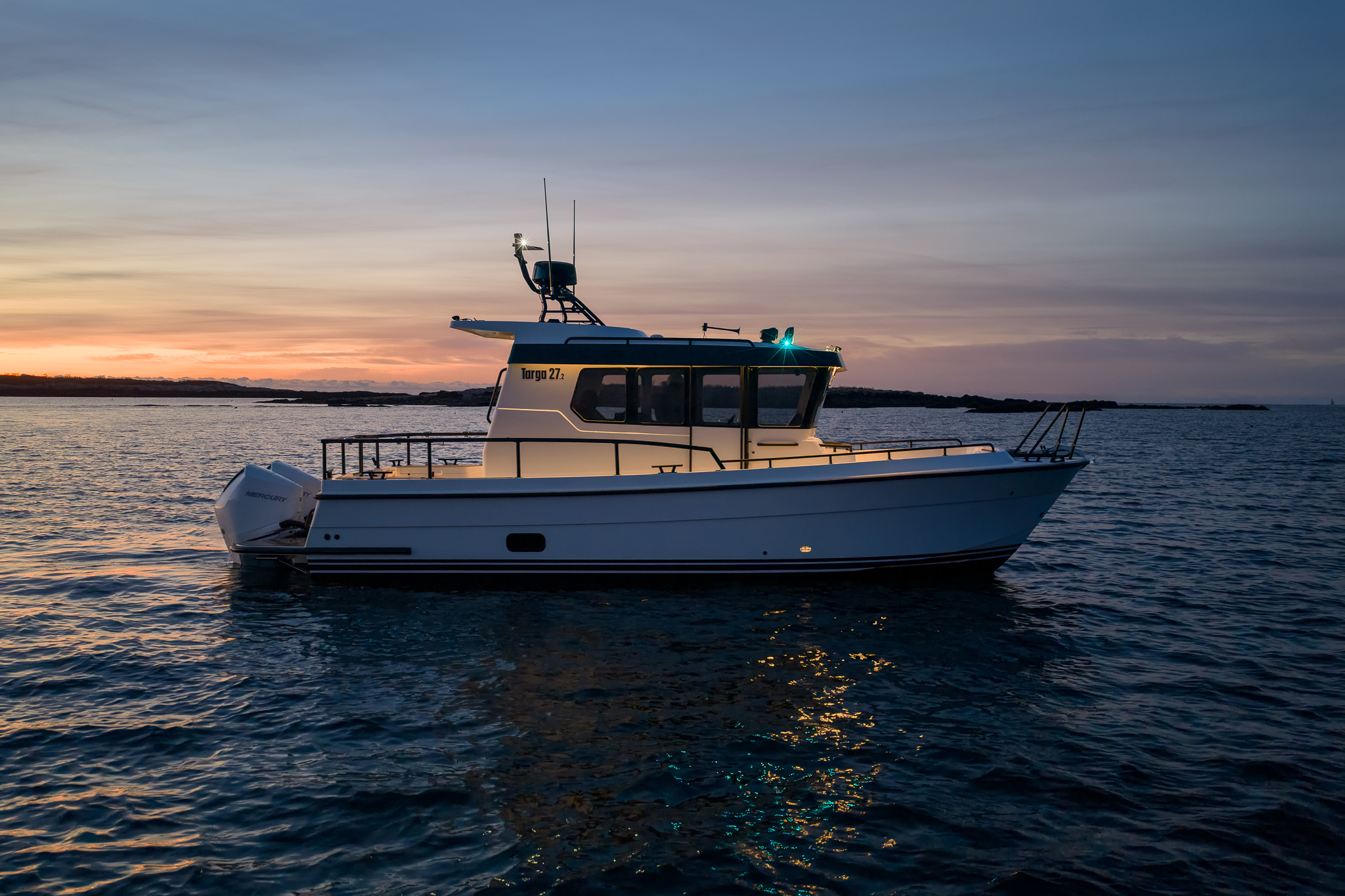
Split Swim Platforms
Because the engines are mounted externally, the stern layout changes immediately.
Instead of one full-width swim platform, you get:
- Port and starboard wing platforms
- A swim ladder tucked under the starboard side
- Easy boarding from docks or dinghies
The platforms are still comfortable and usable, but the engines remain part of the traffic flow around the stern.
The rigging tubes carrying:
- Steering
- Fuel lines
- Wiring
…also pass through this area. They are easy enough to step around, but they are present.
Outboard Access Considerations
One practical difference comes when the engines are trimmed fully upward.
With the outboards raised:
- The cockpit gates only swing inward
- Stern access becomes more restricted
- Boarding around the engines takes more attention
When the engines are partially lowered or fully down, movement improves significantly.
This is one of the more noticeable day-to-day usability differences between the outboard and inboard configurations.
Large Utility and Storage Space
One major benefit of the outboard configuration is what happens beneath the aft deck.
Since the engines are mounted outside the hull, the compartment under the cockpit becomes a large utility and storage area instead of an engine room.
On the outboard version, this space contains:
- Systems
- Electrical equipment
- Machinery access
- Significant gear storage
For owners carrying:
- Water toys
- Cruising gear
- Lines and fenders
- Extra equipment
…the additional storage can be a major advantage.
Targa 27.2 Inboard Diesel Setup
The diesel version uses a single Volvo Penta D6 400 paired with a DPI drive.
This changes the layout of the stern considerably.
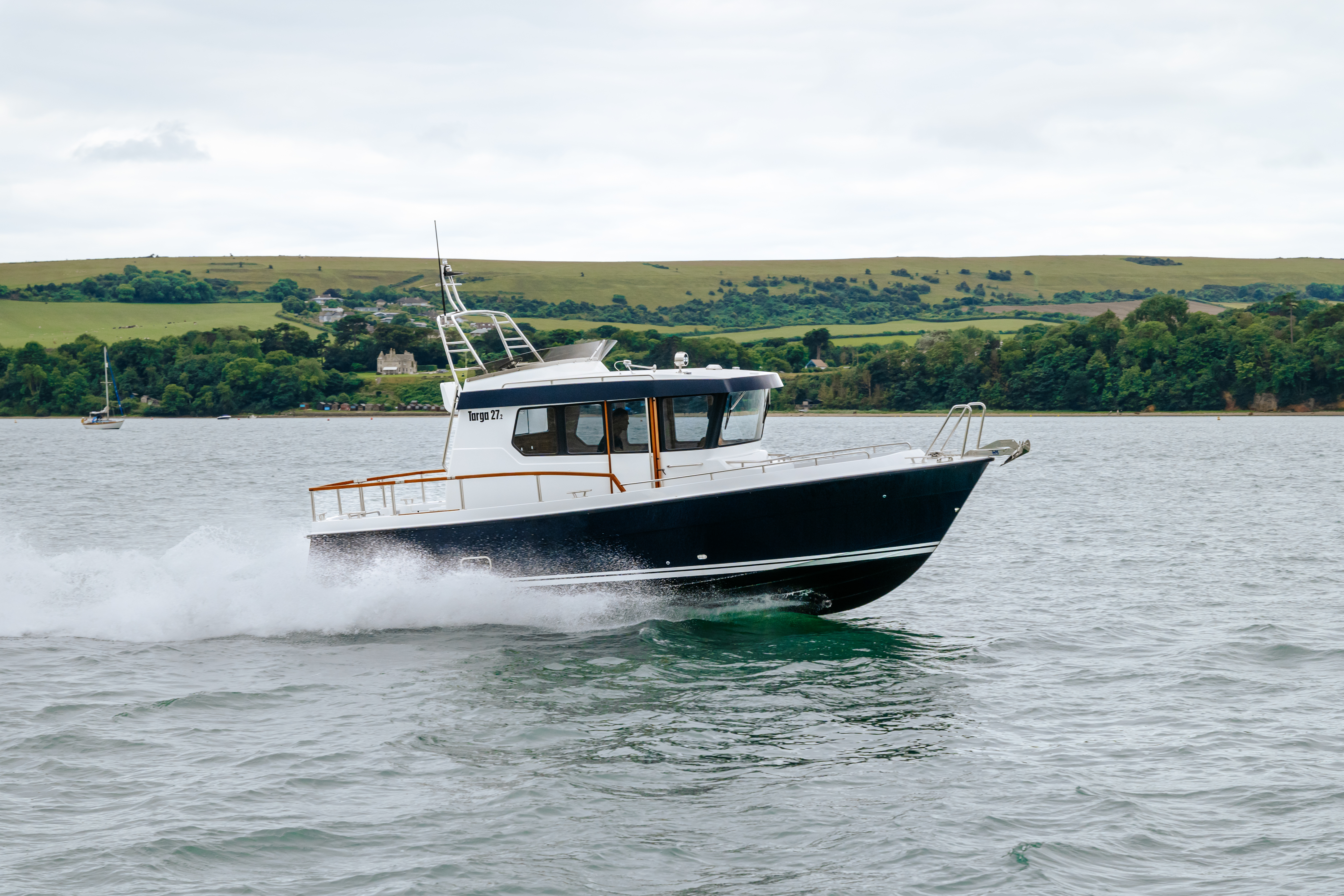
Full-Width Swim Platform
Without outboards mounted on the transom, the entire stern becomes usable deck space.
The inboard Targa 27.2 features:
- A full-width swim platform
- Approximately 10 feet by 3 feet of usable space
- Integrated swim ladder access
This makes:
- Boarding easier
- Swimming more convenient
- Stern movement less restricted
The inboard version also includes dedicated fender storage compartments on both sides of the stern, a practical feature commonly found on Scandinavian and Nordic boats.
Dedicated Engine Room
The tradeoff for the larger swim platform is below deck.
On the diesel version, the aft utility compartment becomes a true engine room housing:
- The Volvo D6 diesel
- Electrical systems
- Batteries
- Drive systems
That means there is effectively little to no general storage in this area compared to the outboard version.
Inboard vs Outboard Performance Differences
Performance is one of the biggest deciding factors when choosing between outboards and diesel inboards.
The differences on the Targa 27.2 are significant but nuanced.
Outboard Performance: Faster Speeds
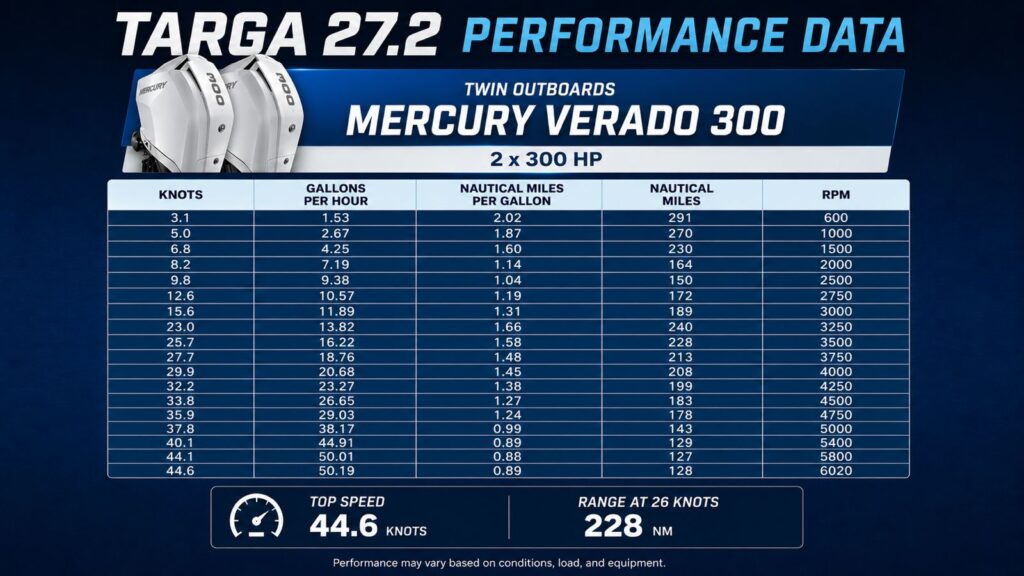
The twin Mercury 300 outboards deliver noticeably higher speed.
Mercury 300 Outboard Performance
- Top speed: Upper 40-knot range
- High cruise: Around 37 knots
- Economical cruise: Around 30 knots
- Range at 37-knot cruise: Approximately 143 nautical miles
- Range at 30-knot cruise: Roughly 200 nautical miles
The outboard setup clearly favors:
- Higher cruising speeds
- Faster transit times
- More performance-oriented operation
Inboard Diesel Performance: Better Range and Efficiency
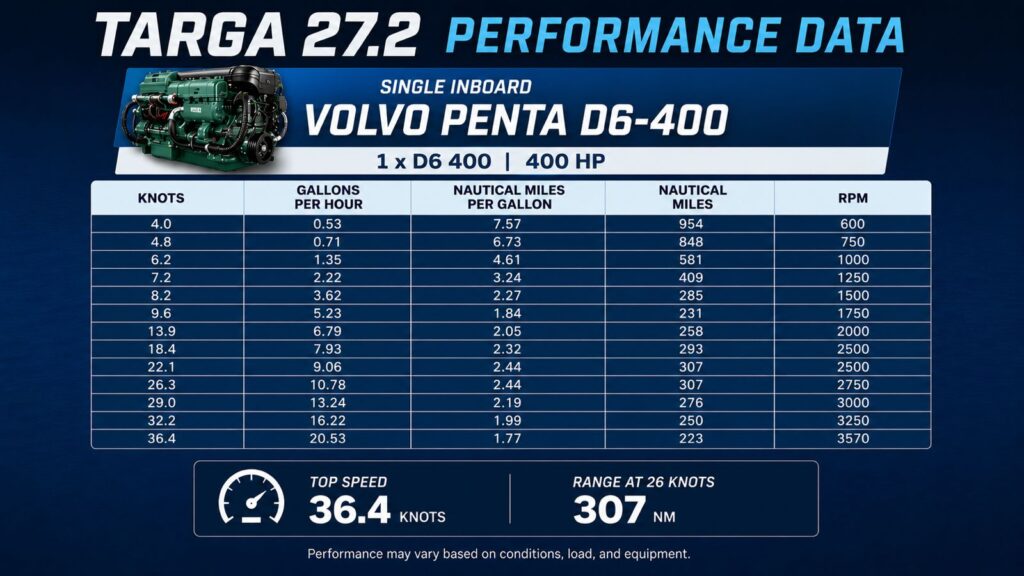
The Volvo D6 400 diesel focuses more on efficiency and long-distance cruising.
Volvo D6 400 Performance
- Top speed: Around 36 knots
- High cruise: Around 30 knots
- Economical cruise: Around 26 knots
- Range at 30-knot cruise: Approximately 275 nautical miles
- Range at 26-knot cruise: Around 300 nautical miles
For boaters covering longer distances or spending more time underway, the diesel offers substantially greater cruising range.
Noise and Running Feel
Another difference between inboards and outboards is how the boat feels underway.
Outboards
With the outboards mounted 10–15 feet behind the pilothouse:
- Most engine noise stays aft
- The cabin feels quieter
- Vibration through the hull is reduced
Inboard Diesel
On the diesel boat:
- The engine is inside the hull
- The sound is deeper and lower in tone
- You feel more of the mechanical character of the boat
Noise levels themselves are relatively similar, but the experience is different.
Some owners strongly prefer the quieter, distant feel of outboards. Others prefer the lower harmonic tone and traditional feel of a diesel inboard.
Maintenance Differences Between Inboards and Outboards
Maintenance intervals are another important ownership consideration.
Outboard Service Intervals
Twin Mercury 300s require:
- Service every 100 hours or annually
- Oil changes
- Lower unit service
- Filters and routine maintenance
Estimated annual service cost:
- Approximately $2,000
Inboard Diesel Service Intervals
The Volvo D6 diesel uses:
- 200-hour service intervals
- Engine oil and filter changes
- Drive service
- Zincs and paint
Estimated annual service cost:
- Approximately $1,800
The diesel benefits from:
- Longer intervals
- One engine instead of two
Initial Purchase Cost
The diesel inboard setup is generally more expensive upfront.
On the 2026 Targa 27.2:
- The Volvo D6 400 package typically costs roughly $15,000–$20,000 more than the Mercury outboard setup
That higher initial investment may make sense for owners prioritizing:
- Range
- Efficiency
- Long-term cruising
While the outboards may appeal more to owners prioritizing:
- Speed
- Simplicity
- Lower purchase cost
Which Targa 27.2 Setup Is Right for You?
There is no universal answer to the inboard vs outboard question. It depends entirely on how you plan to use the boat.
The Outboards May Be Better If You:
- Prioritize speed
- Want more onboard storage
- Like quieter operation underway
- Prefer easier repowering later
- Boat primarily on shorter runs or day trips
The Diesel Inboard May Be Better If You:
- Cruise longer distances
- Prioritize fuel efficiency
- Want maximum cruising range
- Spend more time swimming or anchoring
- Prefer the feel of a diesel-powered pilothouse boat
Explore the Targa 27.2 Further
The Targa 27.2 remains one of the most versatile all-weather pilothouse boats in its size range, regardless of propulsion choice.
Whether configured with:
- Twin Mercury 300 outboards
- Or a Volvo Penta D6 400 diesel
…it delivers the rugged build quality, seaworthiness, and practical design that Targa is known for.
To learn more about layouts, performance data, and available configurations, visit the Targa 27.2 landing page.